
Illuminate Your Paradise Valley Property with Landscape Lighting
Desert Environments provides landscape lighting installation in Paradise Valley, AZ, helping homeowners use outdoor lighting to reveal the character of their property after sunset without overpowering it. A well-planned lighting system can define walking paths, illuminate steps, highlight desert landscaping, and draw attention to architectural or landscape features while making outdoor living spaces more comfortable in the evening. In Paradise Valley, where mountain views and distinctive residential architecture often shape the property, lighting design works best when it enhances what is already there.
With more than 25 years in business and over 12 years of landscape architecture experience, we approach lighting as part of the complete exterior environment. Fixture placement, brightness, viewing angles, landscape features, and how people move through the property all influence the finished result.
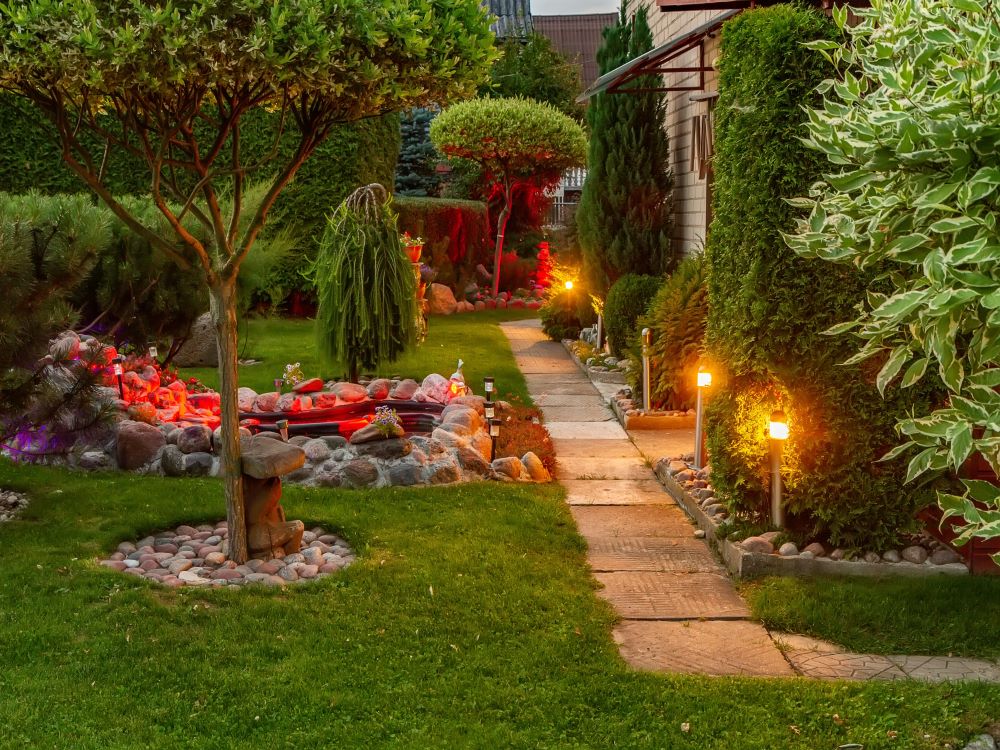
Good Landscape Lighting is About What You Choose to Highlight
More lighting does not necessarily create a better landscape. Illuminating every tree, wall, and pathway equally can flatten the property visually and distract from the features that deserve attention.
Instead, lighting design creates hierarchy. Accent lighting might highlight a distinctive tree, textured wall, or architectural feature, while softer illumination defines a nearby path. Step lights can improve visibility where elevations change without requiring a bright fixture overhead.
This approach is particularly valuable on properties around Mummy Mountain and Clearwater Hills, where terrain and views can be important parts of the landscape. Carefully directed lighting can make the immediate property easier to navigate while preserving the darker backdrop that allows the surrounding mountains and nighttime environment to remain part of the experience.
Lighting Solutions for Different Areas of Your Property
The same lighting fixture should not be expected to solve every need. We consider how each area functions and select the lighting approach accordingly.
Guide Movement Along Paths and Changes in Elevation
Path lighting helps establish clear routes between the home, patios, driveways, gardens, and other outdoor destinations. On larger properties or landscapes with elevation changes, step lights can provide additional visibility where transitions might otherwise be difficult to see after dark.
The objective is comfortable navigation without turning pathways into excessively illuminated corridors.
Give Landscape Features More Presence at Night
Accent lighting allows selected parts of a landscape design to remain visually prominent after sunset. Trees, desert plants, stonework, water features, sculptures, and architectural details can all become focal points when lighting fixtures are positioned with intention.
Homes around Camelback Country Club Estates or Finisterre may have extensive landscaped areas where this layered approach helps create depth. Rather than seeing one uniformly lit yard, the eye moves naturally between selected features.
Make Outdoor Living Spaces More Usable
Patios, gathering spaces, pool surroundings, and other outdoor living spaces often become more inviting once temperatures drop in the evening. Landscape lighting can support those areas without relying solely on brighter lighting attached to the house.
A coordinated lighting system can provide enough illumination for movement and gathering while maintaining the relaxed atmosphere homeowners want outdoors.
Other Services We Offer
- Landscape Design
- Landscape Lighting
- Outdoor Fireplace Installation
- Outdoor Kitchen Building
- Paver Installation
- Water Feature Installation
Designing with Paradise Valley’s Nighttime Setting in Mind
Paradise Valley has a distinctive visual environment after sunset. Properties near Camelback Mountain may have views toward the mountain itself or recognizable formations such as the Praying Monk. Other homes are surrounded by mature desert landscape or positioned on lots where elevation creates expansive nighttime views.
Landscape lighting should respect those conditions.
Fixture orientation is especially important. Poorly directed light can create glare, make neighboring areas unnecessarily bright, or distract from a view. Thoughtful placement keeps illumination focused where it serves a purpose.
The appearance of lighting during daylight hours also deserves consideration. Fixtures should be integrated into the landscape wherever practical so the lighting system does not become a distracting visual feature when it is turned off.
Landscape Architecture Experience Behind Every Lighting Plan
Desert Environments brings more than 25 years of business experience and over 12 years of landscape architecture experience to outdoor projects. We are licensed and bonded, and our broader landscaping background allows us to evaluate lighting in relation to planting, hardscape, pathways, architecture, and other exterior features.
That perspective is particularly useful when lighting is being added as part of a larger landscape improvement. Planning fixture locations alongside planting and hardscape can help avoid conflicts and create a more intentional finished design.
From a residence in Cheney Estates to a hillside property near Mummy Mountain, our focus is on creating outdoor lighting that serves the individual property rather than applying the same lighting pattern everywhere.
Contact Desert Environments to request a free estimate for landscape lighting installation in Paradise Valley, AZ, and explore how thoughtful lighting can change the way you experience your property after sunset.
Hear From Our Clients
Here’s what our clients are saying about working with Desert Environments.


Frequently Asked Questions About Landscape Lighting in Paradise Valley
Landscape lighting costs in Paradise Valley, AZ depend on the size of the property, number and type of lighting fixtures, complexity of the lighting design, existing landscape conditions, and how many areas need illumination. A focused project adding path lighting and step lights will have a different scope than a complete lighting system covering extensive gardens, outdoor living spaces, architectural features, and a large driveway.
Property conditions can also affect installation. Homes around Clearwater Hills or Mummy Mountain may have elevation changes, mature landscaping, stonework, or expansive lots that require a more customized approach to fixture placement and installation.
Rather than beginning with a predetermined number of lights, it is more useful to identify what needs to be illuminated and why. That helps determine where lighting provides practical or aesthetic value and where it is unnecessary. Desert Environments offers free estimates so homeowners can evaluate the property, discuss lighting goals, and establish an appropriate project scope before installation begins.
Start with areas where lighting improves either visibility or the nighttime experience of the property. Walking paths, stairs, changes in elevation, entrances, and frequently used outdoor living spaces are practical priorities. After those areas are considered, accent lighting can be used more selectively to highlight trees, desert landscape features, stonework, water elements, or architecture.
The right priorities will vary by property. A Paradise Valley, AZ home near Camelback Mountain may benefit from restrained lighting that preserves mountain views, while a larger property in Camelback Country Club Estates might require illumination across several connected outdoor spaces.
Think about the property from different viewing positions as well. Lighting may be visible from interior rooms, patios, entryways, and neighboring areas. A coordinated lighting design considers all of those perspectives instead of evaluating individual fixtures in isolation. The goal is to create useful layers of light while allowing darker areas to remain where illumination is not necessary.
Yes. Landscape lighting can often be incorporated into an established Paradise Valley, AZ property without requiring a complete landscape redesign. In fact, mature trees, desert plants, stonework, pathways, and architectural elements can provide excellent opportunities for accent lighting.
The process should begin by evaluating what is already present. Existing plants can influence fixture placement because their size, shape, and growth patterns affect how light travels through the landscape. Hardscape and established walking routes can determine where path lighting or step lights would provide the most practical benefit.
For properties in established areas such as Cheney Estates or Finisterre, careful installation is particularly important when working around mature landscaping and finished outdoor spaces. Fixture locations should provide the intended effect without unnecessarily disrupting existing features. Because Desert Environments has broader landscape design experience, lighting can be considered in relation to the entire property rather than approached as a collection of independent fixtures.
The key is to design for specific purposes instead of trying to illuminate the entire property evenly. In Paradise Valley, AZ, excessive outdoor lighting can reduce visual depth, create glare, and distract from the desert landscape or mountain views that make the setting distinctive.
A layered approach is generally more effective. Path lighting can guide movement, step lights can address elevation changes, and accent lighting can highlight a small number of important landscape or architectural features. Other areas can remain darker, creating contrast and giving the illuminated elements greater visual impact.
Fixture direction matters as much as brightness. A poorly aimed light can be uncomfortable even when it is not especially powerful. Properties near the Praying Monk or along Camelback Mountain may particularly benefit from restrained illumination that allows the surrounding nighttime scenery to remain visible. Professional lighting design considers brightness, placement, angles, viewing positions, and the relationship between illuminated and unlit areas before determining where fixtures belong.