
Landscape Lighting in Phoenix for Better Outdoor Living
Desert Environments installs lighting systems in Phoenix, AZ, for homeowners who want to get more use and enjoyment from their properties after the sun goes down. Landscape lighting installation can make an outdoor space easier to navigate, draw attention to architectural features, and give patios and gathering areas a completely different presence at night. In Phoenix, where daytime heat often makes evenings an important part of outdoor living, lighting should be planned around how the property is actually used after dark.
With more than 25 years in business and over 12 years of landscape architecture experience, Desert Environments considers lighting in the context of the entire property. We look at pathways, planting, hardscape, architecture, gathering areas, and viewing angles before determining where illumination can have the greatest impact.
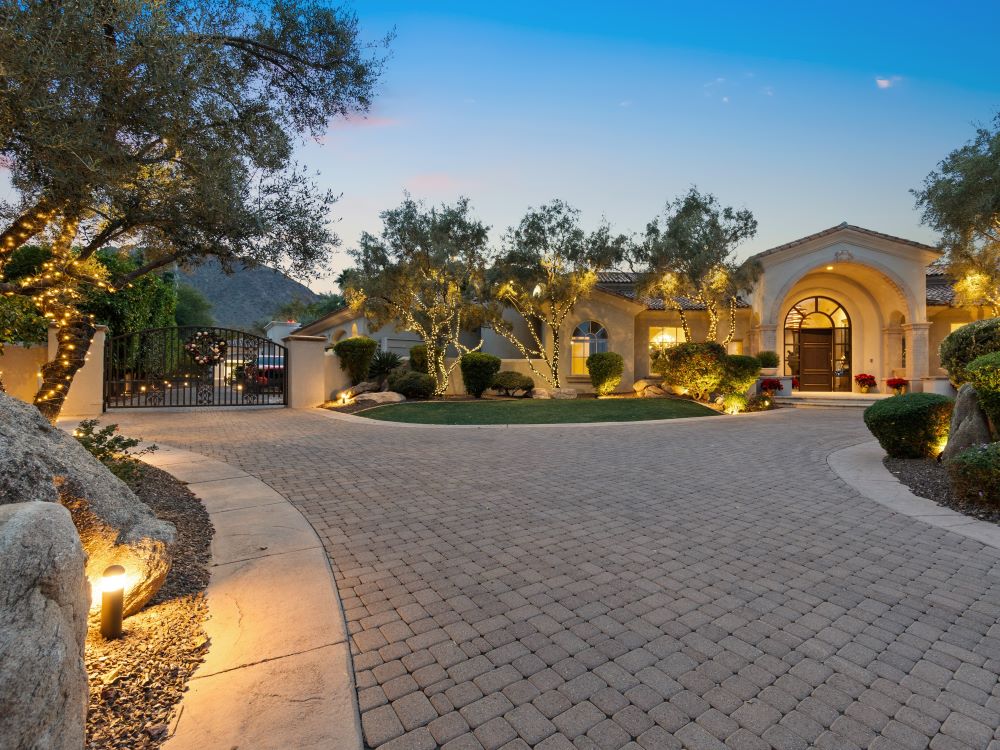
Turn an Underused Yard Into an Evening Destination
Phoenix homeowners often invest considerably in their backyards, but those spaces should not lose their appeal once daylight disappears. A patio that is uncomfortable during a summer afternoon may become one of the most enjoyable areas of the property later in the evening.
Landscape lighting helps support that transition.
Around Arcadia, where mature landscaping and established homes can create layered outdoor environments, carefully positioned lights can showcase trees, walkways, and gathering spaces without illuminating everything at the same intensity. In Biltmore, architectural features and structured landscaping may call for a more precise lighting design that complements the lines of the home.
The objective is to create an outdoor living area that still feels like an outdoor environment, not a room flooded with artificial light.
Solve Common Nighttime Problems with Purposeful Lighting
Different parts of a yard call for different lighting solutions. Instead of starting with a predetermined number of fixtures, we consider what homeowners need to see, where they spend time, and which features deserve attention.
When Paths Disappear After Sunset
Pathway lighting can help define routes between patios, entrances, garden areas, driveways, and other frequently used spaces. This is particularly useful on properties with longer walkways or landscape features that make the route less obvious at night.
Fixture spacing and placement matter. The goal is to create enough visibility to follow the path naturally without producing an overly bright line of identical lights.
When the Home Loses Its Character at Night
Lighting can emphasize architectural features that otherwise disappear after dark. Selective illumination can add dimension to walls, entry areas, columns, trees, and other focal points while creating visual depth across the property.
This can be especially effective in established neighborhoods such as Willo and the Melrose District, where distinctive home styles can influence how the surrounding landscape design is illuminated.
When Outdoor Living Ends Too Early
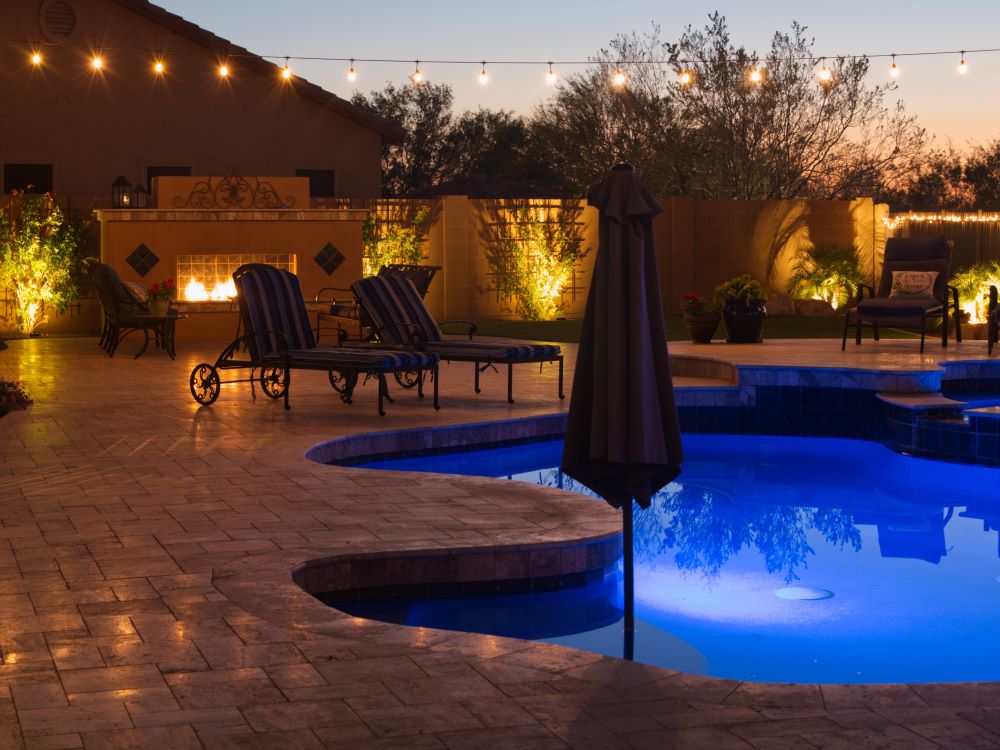
Landscape lighting can make patios, seating areas, and other outdoor spaces more practical after sunset. Low voltage landscape lighting can be incorporated around these spaces to provide layered illumination without relying entirely on brighter fixtures attached to the house.
The result should support conversation, movement, and relaxation while maintaining a comfortable nighttime atmosphere.
Lighting Design Should Work With the Existing Landscape
Phoenix properties range from urban residential lots near Roosevelt Row Arts District to homes positioned closer to the open desert character surrounding South Mountain Park and Preserve. Lighting installation should respond to those differences rather than follow the same layout everywhere.
A desert landscape, for example, can gain considerable visual interest at night when the forms of selected cactus, trees, stone, or textured surfaces are illuminated. Other properties may benefit more from emphasizing architecture, entrances, or outdoor gathering areas.
Fixture selection is only part of the process. Direction, intensity, spacing, and the relationship between illuminated and darker areas determine whether the final lighting system feels balanced.
Even during daylight hours, fixtures remain part of the landscape. Placement should therefore account for how visible the equipment will be when the lights are off as well as how effectively it performs at night.
Experience That Connects Lighting and Landscape Design
Desert Environments is licensed and bonded and has worked in landscaping for more than 25 years. Our team also brings over 12 years of landscape architecture experience, which gives us a broader perspective when adding lighting to an established property or incorporating it into a larger landscape project.
Lighting interacts with planting, hardscape, outdoor living areas, and architecture. Understanding those relationships helps us determine where fixtures make sense and where adding more lighting would contribute little to the overall design.
Whether a homeowner wants to illuminate a compact outdoor space near central Phoenix or add lighting across a more expansive residential landscape, we approach the project according to the property’s individual layout and goals.
Ready to see your yard differently after sunset? Contact Desert Environments to request a free estimate for landscape lighting installation in Phoenix, AZ.
Phoenix Homeowner Experiences with Desert Environments
Here’s what our clients are saying about working with Desert Environments.


Frequently Asked Questions About Landscape Lighting in Phoenix
Low voltage landscape lighting can be a practical option for many Phoenix, AZ residential properties because it can be used to create targeted illumination across pathways, planted areas, architectural features, and outdoor living spaces. The more important question, however, is how the lighting system is designed and where fixtures are positioned.
Phoenix landscapes can include intense sun exposure, irrigation, hardscape, mature planting, and open desert areas. Those conditions should be considered when determining fixture locations and planning installation. A system also needs to account for how the landscape may change as plants mature.
Homeowners in neighborhoods such as Arcadia may want to illuminate mature trees and layered planting, while a property closer to South Mountain Park and Preserve might call for a more restrained approach that maintains the visual character of the surrounding desert.
Rather than choosing fixtures first, begin by identifying where you need visibility and which areas you want to emphasize. The lighting system can then be designed around those specific priorities.
Landscape lighting can be planned at different stages of a Phoenix, AZ landscape project, but coordinating it with other improvements can make the design process more efficient. If you are already updating hardscape, planting, pathways, or an outdoor living area, it makes sense to consider lighting before those elements are finalized.
Planning early allows fixture locations to relate directly to the finished landscape. It also gives the designer an opportunity to consider how plants will mature and whether future growth could interfere with the intended lighting effect.
Lighting can also be added successfully to an existing landscape. Established neighborhoods such as Willo and Melrose often contain mature yards where homeowners want better nighttime visibility without redesigning the entire property. In those situations, the existing landscape becomes the starting point.
Phoenix’s climate also makes evening use an important consideration throughout much of the year. If your patio, pathways, or gathering spaces become difficult to use after sunset, there is no need to wait for a complete landscape renovation before exploring lighting solutions.
There is no ideal number of lighting fixtures for every Phoenix, AZ property. The appropriate amount depends on the size and layout of the yard, the features you want to illuminate, and what the lighting needs to accomplish.
A smaller property may need pathway lighting, a few strategically positioned lights around an outdoor living area, and accent lighting for selected architectural or landscape features. A larger property may contain multiple patios, long walkways, mature trees, entrances, and gathering areas that require a more layered system.
Adding fixtures simply to increase the total number of lights can actually weaken the design. Effective lighting depends on contrast. Allowing some parts of the yard to remain darker gives illuminated trees, walls, pathways, and focal points more definition.
Properties near Biltmore can have very different lighting requirements from urban homes closer to Roosevelt Row Arts District. A site-specific lighting design helps determine the number, placement, and type of fixtures based on the property rather than an arbitrary formula.
Yes. Thoughtfully positioned landscape lighting can significantly change how a Phoenix, AZ home appears from the street after sunset. Architectural features, entryways, specimen plants, trees, and sections of the landscape can be selectively illuminated to create depth and make the property’s design more visible.
Curb appeal does not require lighting the entire front yard. In many cases, selective lighting is more effective. Illuminating an entry area, highlighting the form of a mature tree, or guiding attention toward distinctive architecture can create a stronger impression than using the same brightness everywhere.
This is especially relevant in neighborhoods with recognizable residential character, such as Willo, Arcadia, and areas around the Melrose District. The lighting design should respond to the home’s architecture rather than compete with it.
A professional plan also considers what the lighting looks like from different positions, including the street, driveway, front entrance, and inside the home. That broader perspective helps create a cohesive nighttime appearance rather than a collection of unrelated lighting fixtures.